Burren History Post Famine

managed and how the landscape developed. Prior to the Famine, many upland areas continued to be used as extensive sheep walks, in stark contrast to cultivatable land which was mercilessly exploited by a desperate populace, increasingly dependent on the potato, cow and pig.

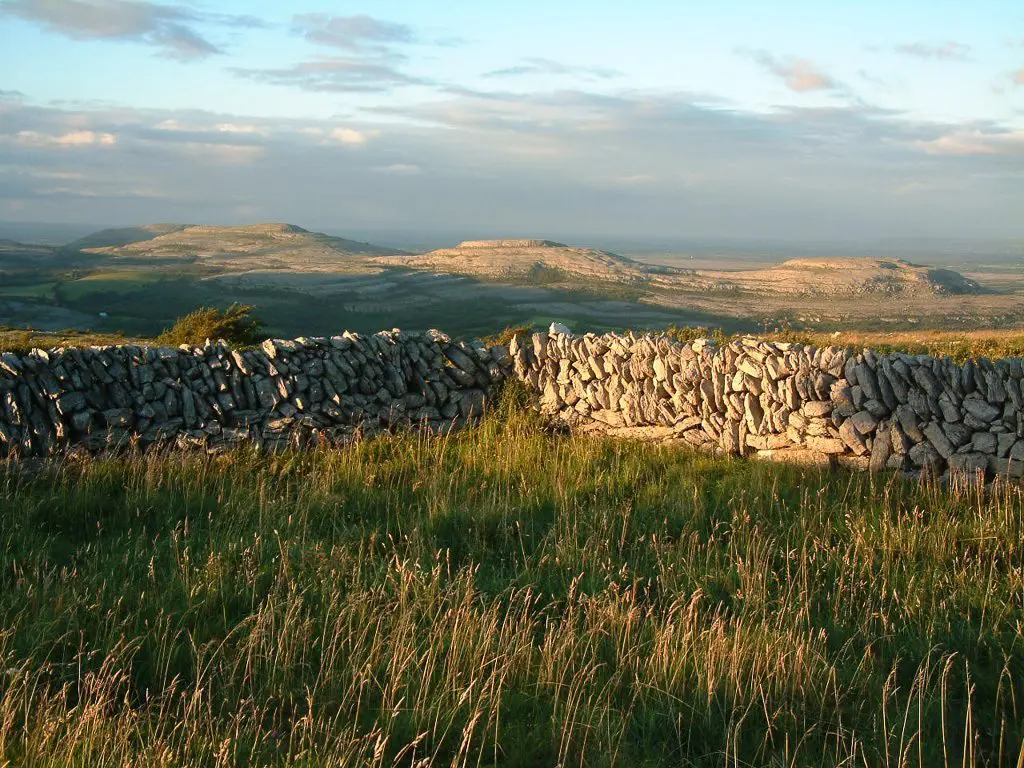
The enormous pressure on the land prior to the Famine, when 400 people per square mile lived in areas such as Fanore and the Ballyvaughan and Turlough valleys, resulted by all accounts in a desolate, barren landscape.

Following the famine, the pressure on this environment diminished notably through an enlargement in holdings, a decline in sheep numbers and a reduction in population. The dominance of cattle was reasserted in the post-Famine period, though sheep remained an important feature of upland grasslands.

The tragic and explosive denouement to the over-exploitation of the environment was thus succeeded by a resumption of a more sustainable system of agricultural management. Again, references from this period continue to stress the high quality of the agricultural produce from what is described as a harsh and desolate landscape.

It is interesting to reflect on the comments of Coulter (1852) who recorded that a ‘fuel famine’ existed at this time in the Burren, such was the rarity of scrub, or woodland, with ferns, brambles and the stringy stems of mountain avens collected for fuel. Such a situation is almost unimaginable in the Burren today, and reminds us of how rapidly landscapes can evolve, over just a few generations in this case.

This remarkable change in the landscape is a reflection of the fact that, following the ravages of the famine, human pressure on the Burren uplands has been diminishing from what would have been an unsustainable level of intensity. This relative lull in upland activity is reflected today, as it was historically, in the gradual reversion of many upland grassland and pavement areas to scrub, primarily hazel.