Burren History Medieval Period

The agricultural significance of the Burren in Medieval times is clearly reflected in the fact that over twenty tower houses are found in the region (and fifty others in the adjoining baronies of Corcomroe and Inchiquin), several of which feature walled ‘bawns’ (from ba dhúin’ or cattle enclosure), built to protect livestock.

Many of these tower houses are located on the border of the Burren barony, leading historians to believe that they were built by the ruling O’Loughlin clan to defend the coveted winterage lands of the Burren. The famous Leamanah castle represents a fine example, dating from 1490AD, situated on the shale-limestone interface at the southern edge of the Burren. Dunguaire castle, located where the limestone of the Burren dips into Galway bay, is another good example.

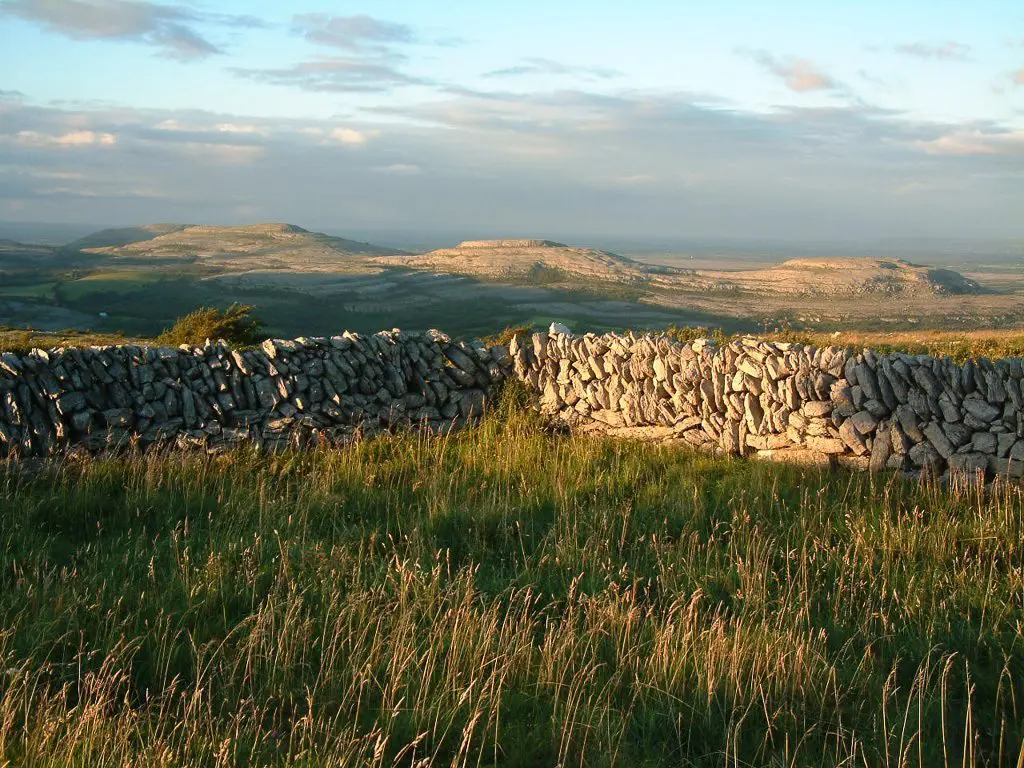
That the richness of the Burren in terms of its agricultural produce was of historic renown is attested to by the frequent raids to which the region was subjected in medieval times. Tales of daring raids to the Burren feature frequently in the pages of the ‘Annals of the Four Masters’: as early as 1055 AD we read of a ‘predatory excursion’ which produced many ‘spoils’. In 1314 AD marauding parties ‘gathered herds, flocks and all valuable gear of the Corcamachs’ from among ‘Burren’s uncouth ways, narrow gaps, crooked passes, rugged boulders and high sharp crests’ (O’Donovan, 1851).

In a reference from 1317AD we read of ‘Burren’s hilly grey expanse of jagged points and slippery steeps, nevertheless overflowing with milk and yielding luscious grass’ (O’Grady, 1929). In 1600 AD, a raid by O’Donnell stripped the Burren of its ‘cattle, flocks and booty’, and later with ‘enormous amount of cattle and plunder, they left the cleft stone passes of white Boireann behind’ (Ó Cléirigh, cited in Ó Dálaigh, 1998).